
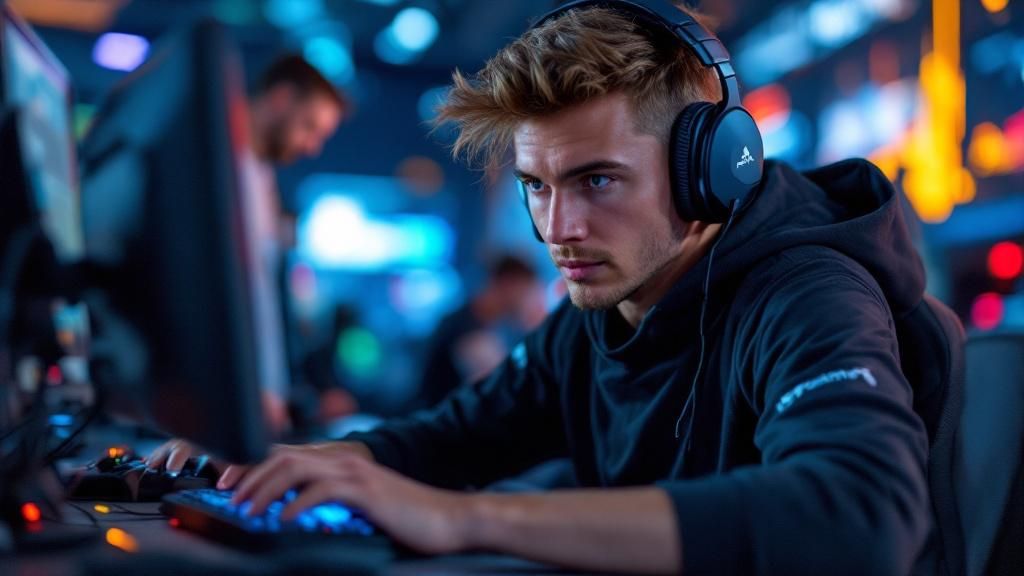
The competitive gaming landscape is undergoing a significant transformation as esports teams invest in advanced coaching strategies to elevate player performance. Building on insights from traditional sports science, gaming coaches are now implementing systematic training programmes, psychological conditioning, and advanced analytics to refine mechanics and strategic decision-making. This article examines the cutting-edge techniques transforming esports development, examining how these novel approaches are reshaping player development programmes and setting new standards for excellence in competitive esports.
Innovative Training Methods
Modern gaming coaches are revolutionising player development by integrating data-driven methodologies previously reserved for traditional athletics. Advanced statistical analysis now measure reaction times, strategic choices, and mechanical consistency across thousands of gameplay hours. Coaches employ this detailed information to identify specific weaknesses and design personalised coaching plans accordingly. By introducing systematic analysis to esports coaching, organisations are attaining quantifiable gains in player consistency and performance results, fundamentally reshaping how talent is developed within the industry.
Psychological conditioning has become a key component of modern esports coaching strategies. Professional coaches now utilise sports psychologists to help players handle performance anxiety, maintain focus during intense matches, and develop resilience against setbacks. Mental training protocols include visualisation exercises, mindfulness techniques, and stress management strategies specifically designed for competitive gaming environments. This holistic approach recognises that elite performance demands both technical mastery and psychological fortitude, allowing players to perform optimally when stakes are highest.
Structured training programmes have replaced the informal practice sessions of previous esports periods. Coaches now develop structured training schedules that emphasise particular skill advancement, tactical awareness, and team cohesion. These initiatives utilise structured practice techniques, where athletes concentrate deeply on challenging aspects of their performance rather than just building up time. By adopting periodisation methods drawn from established sports science, teams can enhance player progression schedules and prevent burnout whilst sustaining performance standards.
Joint coaching frameworks have reshaped how esports teams manage athlete progression. Rather than relying solely on individual coaches, organisations now employ diverse specialist groups including mechanical specialists, strategy experts, and support personnel. This integrated approach enables comprehensive player assessment and targeted intervention across different performance aspects. Team coaches work together with individual skill specialists to maintain unified communication and synchronised improvement methods, fostering mutually beneficial conditions where players obtain complete backing for continuous advancement.
Video analysis technology has become essential within modern coaching arsenals. Coaches leverage cutting-edge software to deconstruct gameplay footage, identifying repeated tendencies in both successful and unsuccessful plays. This detailed examination allows coaches to offer precise, actionable feedback grounded in concrete evidence rather than broad comments. Players can examine their performances alongside coach commentary, promoting enhanced understanding of their strategic thinking and mechanical execution throughout competitive matches.
Recovery and wellness protocols now are given equal priority alongside active training within evolving coaching frameworks. Coaches acknowledge that consistent peak performance demands proper sleep, nutrition, and psychological recovery between rigorous training sessions. Modern organisations implement comprehensive wellness programmes addressing physical health, dietary optimisation, and psychological wellbeing. This preventative approach reduces the risk of injury, maintains stable performance levels, and demonstrates genuine investment in players’ long-term health and career sustainability within professional esports.
Cognitive Conditioning and Mental Resilience
Mental fortitude has become equally crucial as mechanical skill in professional gaming. Leading esports organisations now employ sports psychologists and mental coaches to develop comprehensive psychological conditioning initiatives. These specialists collaborate with players to cultivate emotional management, stress management, and cognitive resilience, ensuring athletes sustain peak performance under tournament pressure. By addressing the psychological dimensions of competitive gaming, coaches are helping players overcome anxiety, maintain focus during prolonged matches, and recover mentally from setbacks.
Developing Your Ability to Focus
Sustained focus throughout high-stakes matches distinguishes elite players from their competitors. Contemporary gaming coaches implement research-backed focus techniques rooted in sports psychology research. Players engage in mindfulness training, visualization drills, and focus-management drills designed specifically for esports environments. These methods strengthen neural pathways associated with focus, enabling players to maintain optimal cognitive performance across complete tournaments. Coaches track focus indicators throughout training sessions, identifying lapses and introducing targeted interventions to enhance consistency.
Effective focus training requires consistent practice and tailored methods tailored to each player’s needs. Gaming coaches assess each athlete’s attentional tendencies, pinpointing factors that cause mental lapses during high-pressure situations. Through structured practice and mental drills, players develop reflective thinking—the ability to monitor and adjust their own psychological condition. This self-awareness proves crucial during tournaments, allowing players to recognise distractions and refocus rapidly on performance goals.
- Mindful breathing sessions running 15 to 20 mins each day
- Mental imagery practice replicating intense competitive scenarios
- Focus training drills building prolonged concentration intervals
- Biofeedback monitoring monitoring pulse rate and brainwave patterns
- Focus maintenance techniques for match conditions
Implementation of these concentration-building methods has produced quantifiable improvements in player competitive performance. Teams report strengthened decision-making accuracy, faster reaction times to sudden changes, and enhanced reliability across several competitions. Players develop greater confidence in their capacity to sustain focus under demanding circumstances, converting mental enhancements into measurable competitive edge during competitive events and crucial matches.
Technological Implementation in Learning and Development
In-Depth Analytics and Performance Monitoring
Modern gaming coaches utilise sophisticated software platforms to analyse player performance data with exceptional detail. These systems collect comprehensive information on reaction times, decision-making patterns, and tactical positioning, enabling coaches to identify particular aspects needing development. By utilising heat maps and replay analysis tools, coaching staff can dissect sophisticated in-game situations and offer specific recommendations. This analytics-focused strategy transforms personal impressions into measurable findings, helping players to understand their strong points and areas for improvement thoroughly. The incorporation of AI technology substantially strengthens this capability, predicting performance trajectories and recommending bespoke training changes.
The adoption of live tracking systems has revolutionised how coaches assess practice activities and competitive matches. Biometric sensors now record bodily reactions including heart rate variability, tension indicators, and tiredness markers during gameplay. This information offers significant value for comprehending how psychological pressure affects performance and decision-making quality. Coaches leverage these insights to design focused psychological training programmes, ensuring players maintain peak mental performance during critical match situations. The combination of performance metrics and physiological data establishes a holistic understanding of player development, enabling more effective intervention strategies and personalised coaching approaches.
VR and Simulated Training Programmes
Virtual reality technology has become a revolutionary tool in esports coaching, enabling players to train in challenging plays in regulated settings. These immersive simulations recreate competitive situations with remarkable accuracy, permitting athletes to establish muscle memory and tactical reactions without competitive stress. VR training platforms enable coaches to adjust parameters systematically, focusing on individual competencies for concentrated improvement. Players can repeatedly encounter demanding conditions, building confidence and improving decision-making processes. This technology proves to be particularly valuable for preparing for uncommon high-stakes situations that occur infrequently during everyday play, ensuring thorough readiness for top-tier contests.
Simulation-driven preparation goes further than individual skill development to encompass team-based tactical preparation. Coaches leverage advanced gaming technology to develop customised situations reflecting opponent strategies and competitive pressures. Teams can rehearse synchronised reactions to different challenges, building coordination and communication systems essential for elite performance. The ability to replay and analyse virtual matches delivers useful understanding into strategic efficiency and group unity. Furthermore, immersive simulation training lowers injury potential stemming from repetitive practice, enhancing career sustainability. These technical innovations broaden access to elite-level training methodologies, allowing teams globally to establish elite coaching practices.
Artificial Intelligence and Predictive Analysis
Machine learning algorithms now analyse vast datasets covering player statistics, opponent tendencies, and match outcomes to produce predictive insights. These systems recognise patterns beyond human analysis, revealing optimal strategies against specific opponents and drawing attention to vulnerability areas needing defensive focus. Coaches employ algorithmic recommendations to guide competition strategy, ensuring teams participate in competitions well-equipped. The technology keeps improving from match data, refining prediction accuracy over time. This advanced evaluation enables coaching staff to make evidence-based decisions regarding athlete improvement objectives and competitive refinements, maximising competitive advantage through technological innovation.
Predictive analytics cover individual player development, predicting performance patterns and establishing appropriate training loads for continuous progression. Machine learning models assess how distinct coaching methods affect athlete development, empowering coaches to personalise development programmes methodically. These systems recognise when players reach development plateaus, suggesting corrective measures to drive performance gains. Moreover, predictive models forecast injury likelihood drawing from training intensity and performance data, allowing preventative measures. This anticipatory strategy to athlete development represents a paradigm shift from reactive coaching, positioning organisations to optimise athlete development whilst sustaining career longevity and market competitiveness.
